
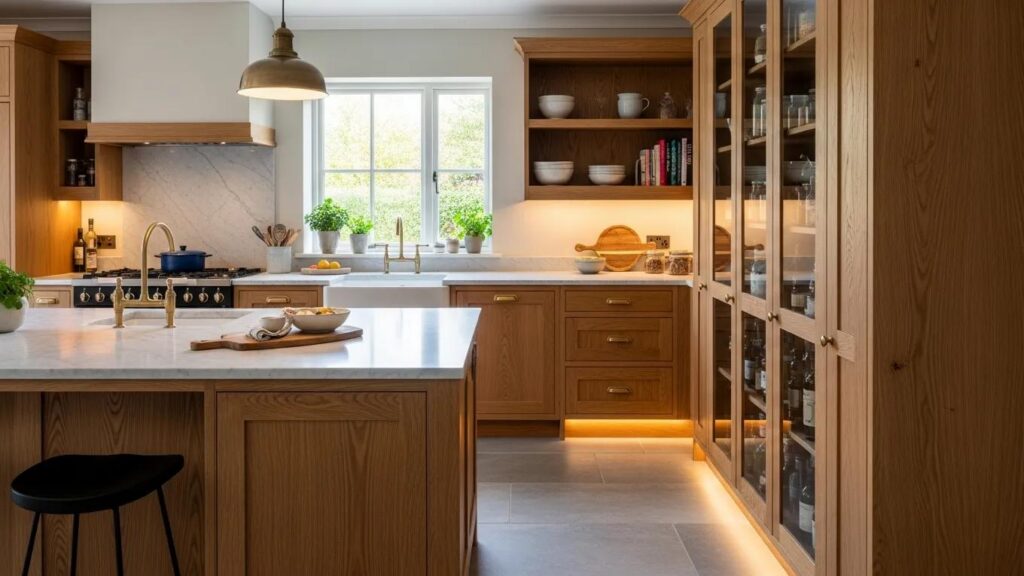
Solid Wood Cabinets vs. Particle Board Cabinets: Which Is Best for Affordable and Durable Kitchen Solutions?
By Andrei Scvortov, Kitchen Wholesale
Choosing cabinet material affects appearance, durability, cost and environmental impact. This article compares solid wood and particle board to help you pick the best option for your kitchen and budget.
Advantages of Solid Wood Cabinets:
Solid wood appeals to homeowners who prioritise longevity and natural character.
- Durability and Longevity: Solid wood is robust and can last decades with routine care.
- Aesthetic Appeal: Natural grain and colour give a unique, high-end look.
- Repairability: Scratches and finish wear can be repaired by sanding and refinishing.
For high-quality solid wood options, Kitchen Wholesale lists several durable, attractive cabinet ranges.
Disadvantages of Solid Wood Cabinets:
Solid wood requires a larger upfront investment and some upkeep.
- Higher Cost: More expensive than engineered alternatives.
- Maintenance Requirements: Periodic polishing or refinishing helps preserve the finish.
Advantages of Particle Board Cabinets:
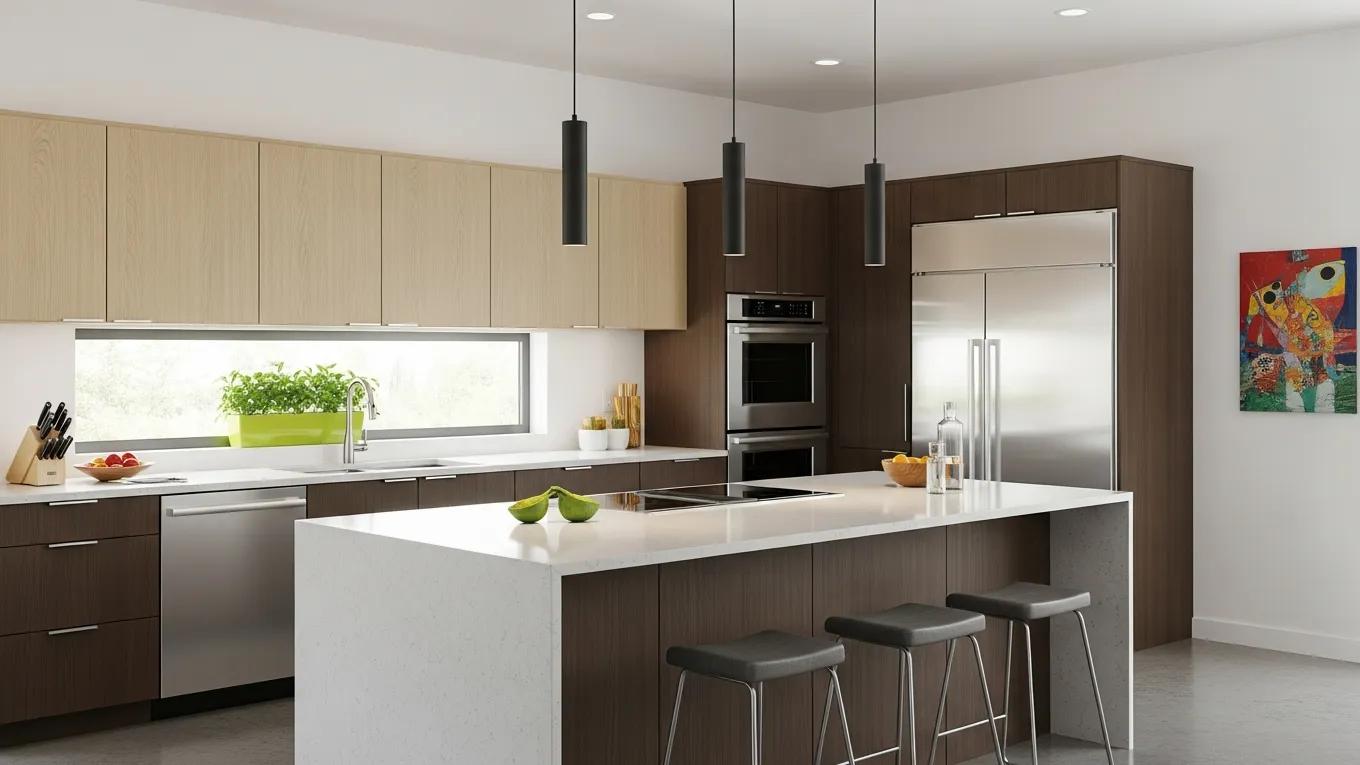
Particle board is a budget-friendly choice that can achieve modern looks with laminate finishes.
- Affordability: Lower cost makes it attractive for tight budgets.
- Lightweight: Easier to handle and install for many projects.
- Smooth Surface: Readily accepts laminates and veneers for varied styles.
Kitchen Wholesale offers particle board cabinet options suited to cost-sensitive renovations.
Disadvantages of Particle Board Cabinets:
Particle board can be less durable and vulnerable to moisture if not properly protected.
- Less Durability: More prone to damage under heavy use.
- Moisture Resistance Issues: Can swell or warp if exposed to water.
Manufacturing improvements can improve particle board moisture resistance and durability, narrowing some performance gaps.
Particle Board Durability and Moisture Resistance
The results showed that water absorption decreased as EPS content was increased from 1.5 to 2.0 and thickness swelling indicated that WPP with 0.85 mm particle sizes and 1.5 resin dosages had the least value between 2.38 and 3.51% after 7–28 days of prolonged immersion in water. MOR and MOE indicated that the optimum performances of the WPP boards were recorded before the prolonged immersion in water at 4.3 MPa and 187.8 MPa. WPP with 0.85 and 1.75 mm particle sizes with 2.0 resin dosage had good post immersion performance. This study demonstrated that wood and EPS wastes are sustainable materials for producing composite wood based panels that are still durable in moist environment.
Durability and strength properties of particle boards from polystyrene–wood wastes, BA Akinyemi, 2019
What Are the Key Differences Between Solid Wood and Particle Board Cabinets?
Solid wood wins on long-term durability and resale appeal; particle board wins on price and ease of installation. Maintenance needs and moisture sensitivity are the main trade-offs.
- Durability Comparison: Solid wood is more durable under heavy use.
- Cost Comparison: Particle board is typically much cheaper.
- Maintenance Needs: Solid wood needs more upkeep but can be refinished.
How Do Material Types Affect Cabinet Quality and Appearance?
Solid wood conveys a premium, timeless finish; particle board can mimic wood visually but usually lacks the same feel and repair options.
What Are the Construction Methods for Each Cabinet Type?
Solid wood often uses traditional joinery for strength; particle board cabinets rely on screws, glue and edge banding, which can limit longevity.
How Do Solid Wood and Particle Board Cabinets Compare in Durability and Maintenance?
Solid wood withstands wear better and can be refreshed; particle board needs careful moisture control and may be replaced sooner in high-use scenarios.
What Is the Expected Lifespan of Solid Wood Cabinets vs. Particle Board?
Solid wood: often 20+ years with care. Particle board: commonly 5–10 years depending on use and environment.
What Maintenance Practices Are Recommended for Each Material?
Solid wood: dust regularly, clean with a soft damp cloth, and refinish as needed. Particle board: keep dry, wipe with a damp cloth, and avoid standing water.
Which Cabinet Type Offers Better Value: Cost and Affordability Analysis?
Solid wood costs more upfront but may save replacement costs long term; particle board lowers initial spend but can have higher lifecycle costs if replaced sooner.
How Do Prices of Solid Wood Cabinets Compare to Particle Board Options?
Solid wood typically costs more per linear foot than particle board; actual prices vary widely by species, finish and construction.
What Are the Long-Term Cost Implications of Each Material?
Consider initial price, expected lifespan, repairability and resale impact when assessing total lifecycle cost.
How Do Environmental Impact and Sustainability Influence Cabinet Choice?
Solid wood can be sustainable when certified; particle board often uses recycled content but may include adhesives that affect indoor air quality.
Are Solid Wood Cabinets More Eco-Friendly Than Particle Board?
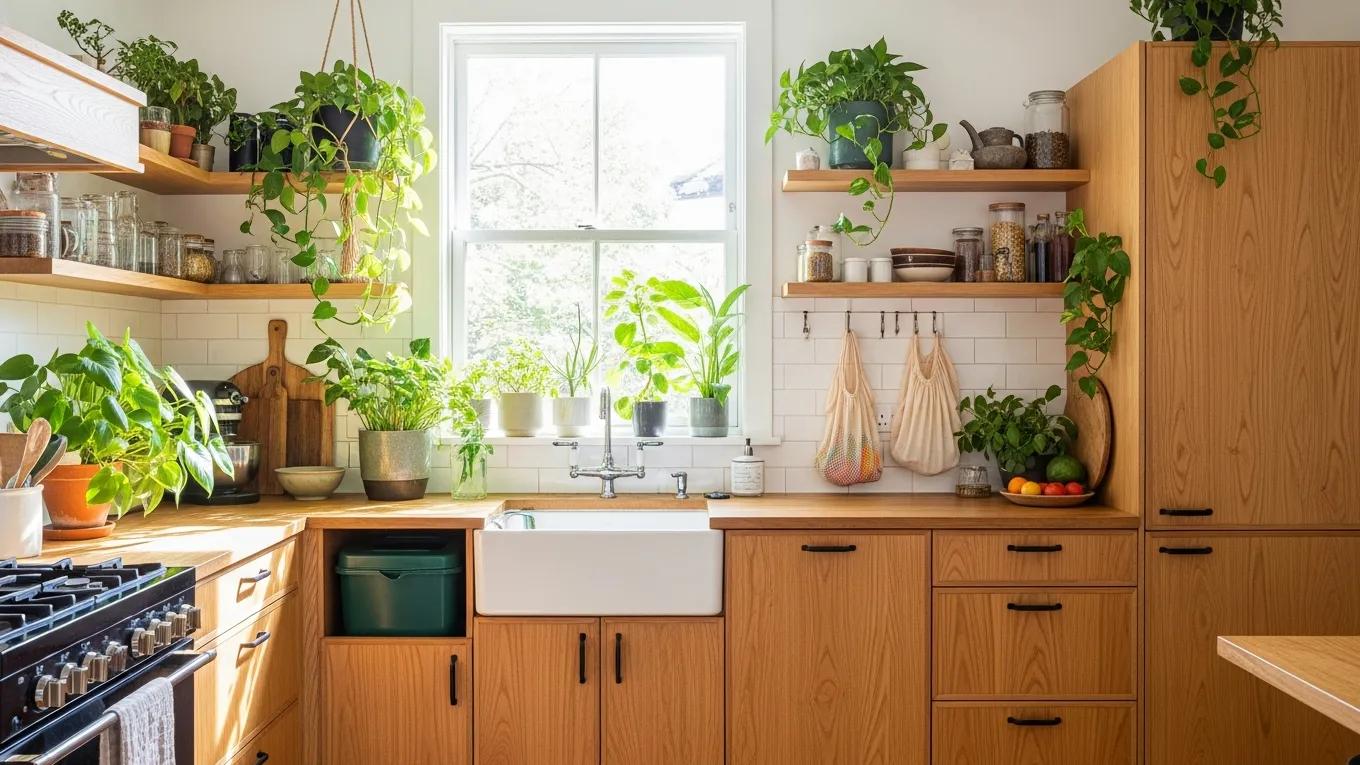
When sourced responsibly, solid wood is biodegradable and low-emission; choose low-formaldehyde particle board if you prioritise indoor air quality.
What Are the Benefits of Choosing Sustainable Kitchen Cabinet Materials?
Sustainable choices reduce environmental impact, support better indoor air quality and can increase long-term value.
- Environmental Protection: Encourages responsible resource use.
- Health Benefits: Lower emissions improve indoor air quality.
- Long-Term Value: Durable, responsibly made cabinets last longer.
Weigh these factors to match your budget and values. For personalised guidance, contact us.
Frequently Asked Questions
What factors should I consider when choosing between solid wood and particle board cabinets?
Balance budget, expected lifespan, moisture conditions and desired finish; pick solid wood for longevity and particle board for lower cost.
Can I customize particle board cabinets like I can with solid wood cabinets?
Particle board allows finish and colour changes but is less flexible for intricate joinery than solid wood.
How do solid wood and particle board cabinets perform in high-humidity environments?
Solid wood, when treated properly, handles humidity better; particle board risks swelling unless sealed and protected.
Are there any eco-friendly options for particle board cabinets?
Yes — look for recycled-content boards and low-emission (CARB-compliant) products.
What are the best cleaning practices for maintaining solid wood and particle board cabinets?
Use a soft, damp cloth for both; avoid harsh chemicals and standing water. Refinish solid wood as needed.
How do the resale values of homes with solid wood versus particle board cabinets compare?
Solid wood cabinets typically contribute more to resale appeal due to perceived quality.
What are the most common finishes available for solid wood and particle board cabinets?
Solid wood: stains, paints and clear coats that highlight grain. Particle board: laminate and veneer finishes that imitate wood or modern surfaces.