
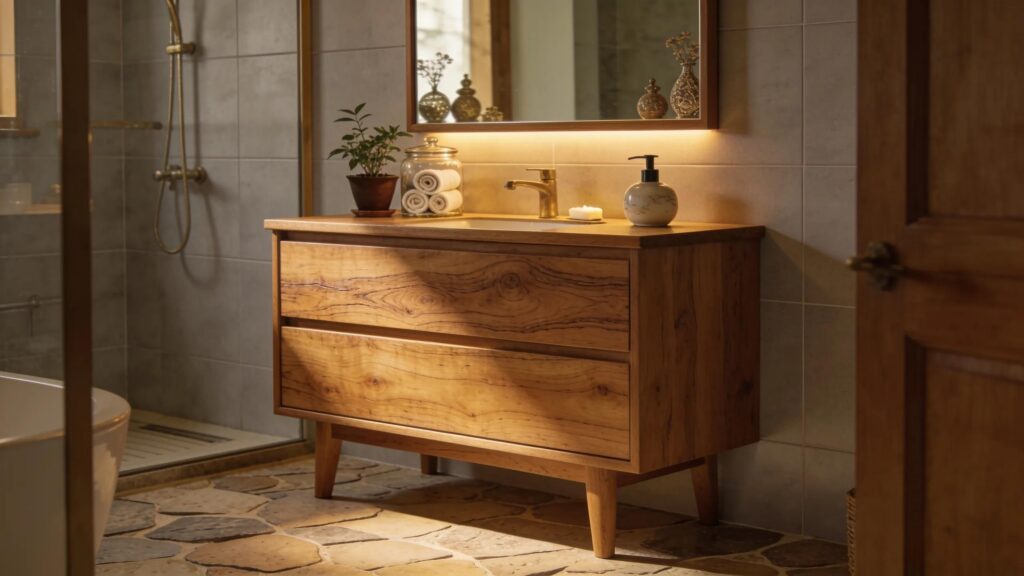
Why Choose Solid Wood Bathroom Vanities Over MDF: Durable and Stylish Bathroom Vanity Materials Comparison
By Andrei Scvortov, Kitchen Wholesale
Selecting between solid wood and MDF (medium-density fiberboard) for a bathroom vanity affects appearance and function. Solid wood is prized for durability, natural grain, and long-term value; this article compares solid wood and MDF across durability, appearance, maintenance, environmental impact, and cost to help inform your choice.
Comparison of Solid Wood Vanities vs. MDF for Bathroom Use
Solid wood offers greater strength and longevity, while MDF is a cost-effective engineered alternative; the right choice depends on budget, expected lifespan, and finish quality.
Durability:
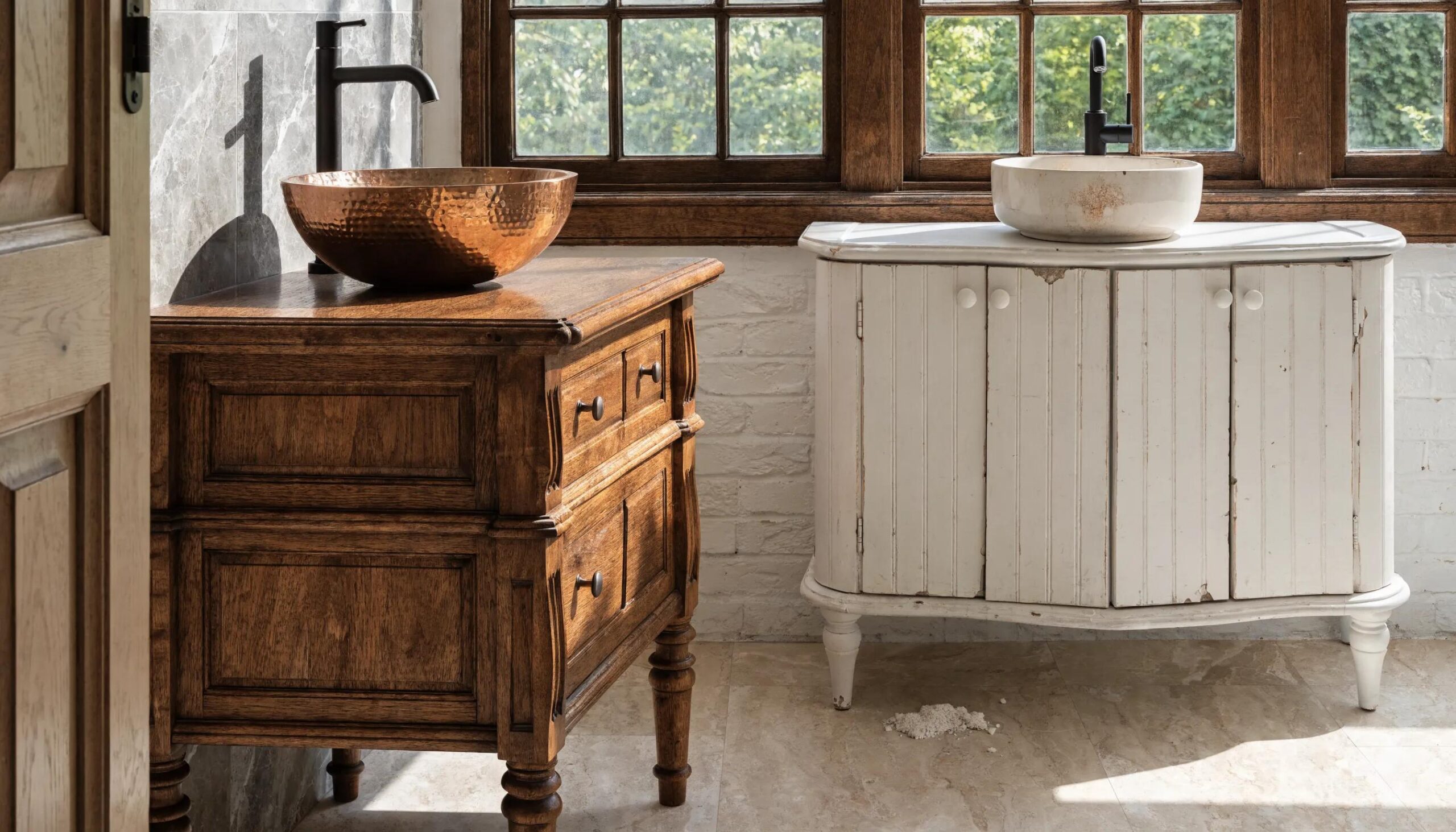
Solid wood resists everyday wear better than MDF, is less prone to warping or cracking, and—when finished correctly—tolerates bathroom humidity more effectively; typical solid-wood lifespans exceed those of MDF.
Aesthetics:
Solid wood shows natural grain and depth, accepts refinishing, and delivers a warmer, higher-quality look; MDF usually relies on paint or veneer and lacks the character of timber.
Maintenance:
Solid wood needs periodic refinishing and reliable sealing; MDF requires less routine care but is more vulnerable to water damage if seals fail, so proper cleaning and protection are important for both.
Overall Value:
Although pricier upfront, solid wood often offers superior long-term value through durability, refinishability, and positive resale impact for homeowners focused on lasting quality.
What Are the Key Differences Between Solid Wood and MDF Bathroom Vanities?
The main differences are composition (natural timber versus engineered fibers and binders), moisture resistance, and maintenance needs—solid wood is generally stronger and more durable in moist environments.
How Does Material Composition Affect Vanity Durability?
Natural timber’s cellular structure provides dimensional stability and strength; MDF’s compressed fibers and binders can be weakened by sustained humidity, reducing structural integrity.
What Are the Moisture Resistance Properties of Solid Wood vs MDF?
Properly sealed solid wood tolerates bathroom humidity with routine maintenance; MDF is more prone to swelling and failure unless protected by effective sealing and installation.
Why Is Solid Wood Preferred for Bathroom Vanity Durability and Longevity?
Solid wood supports repair and refinishing, sustaining structural integrity over time; MDF is more likely to require replacement once compromised by moisture or impact.
How Does Solid Wood Vanity Durability Compare to MDF?
Solid wood typically outlasts MDF, making it the practical choice where long-term durability is a priority.
What Maintenance Practices Enhance Solid Wood Vanity Lifespan?

The following maintenance practices help preserve solid wood vanities:
- Regular Refinishing: Refinish every few years to protect the surface.
- Proper Sealing: Use high-quality sealants to prevent moisture damage.
- Gentle Cleaning: Clean with mild soap and water; avoid harsh chemicals.
Following these steps reduces the risk of moisture-related issues and keeps the vanity functional and attractive.
What Design Styles and Trends Are Available for Solid Wood Bathroom Vanities in 2026?
Solid wood vanities span minimalist contemporary to rustic farmhouse styles, with growing emphasis on sustainable materials and responsible sourcing to meet varied design preferences.
How Do Solid Wood Vanities Support Eco-Friendly Bathroom Designs?
When sourced from responsibly managed forests, solid wood reduces reliance on non-renewable materials and, because of its longer service life, lowers replacement frequency and waste.
How Does Pricing and Value of Solid Wood Vanities Compare to MDF Alternatives?
Solid wood usually carries higher upfront costs but often justifies them via longer service life and the option to refinish; MDF can be a more budget-conscious short-term option.
What Is the Price Difference Between Solid Wood and MDF Bathroom Vanities?
Price ranges vary by design and craftsmanship: solid wood units commonly start higher while MDF-based vanities are available at lower price points, making MDF attractive for tight budgets.
How Does Solid Wood Offer Better Long-Term Value?
Greater durability, refinishability, and lasting aesthetic appeal help solid wood deliver better value over an extended service life and can contribute positively to property value.
This table highlights the key distinctions in durability and maintenance between solid wood and MDF.
If you are searching for bathroom vanities in London or considering custom solutions, visit a showroom or consult a designer to review materials, finishes, and configurations suited to your layout and style.
For project-specific advice or quotes, contact a reputable supplier who can advise on selection and customisation options.
Frequently Asked Questions
1. What are the environmental benefits of choosing solid wood over MDF for bathroom vanities?
Solid wood from responsibly managed forests reduces pressure on non-renewable resources and, because it lasts longer, results in fewer replacements and less waste.
2. Are there any specific types of solid wood recommended for bathroom vanities?
Durable species such as teak, oak, and cherry are commonly recommended: teak resists decay, oak is strong with prominent grain, and cherry develops rich tones over time.
3. Can you easily find solid wood bathroom vanities in custom sizes?
Many manufacturers and cabinetmakers offer custom sizing and fabrication to achieve precise fit, tailored materials, and finishes.
4. How does humidity affect the longevity of solid wood bathroom vanities?
Timber expands and contracts with humidity, but correctly sealed solid wood tolerates these changes better than MDF; regular sealing and refinishing minimise risk.
5. What refinishing options are available for solid wood vanities?
Common refinishing steps include sanding, staining to adjust colour, and applying protective coatings such as polyurethane or varnish to restore appearance and durability.
6. How do I clean and maintain my solid wood bathroom vanity?
Use a mild soap solution and a soft cloth following the grain, avoid abrasive cleaners, dust regularly, and reseal or refinish as needed.
7. What design trends can I expect for solid wood bathroom vanities in the coming years?
Expect continued focus on sustainability, minimalist profiles, natural finishes, organic shapes, and a continued interest in vintage and rustic interpretations.