
By Kitchen Wholesale Editorial Team · Updated 2026-08-26
Solid wood cabinets offer natural grain, superior durability, and long-term value, while engineered options like 5/8″ melamine boxes and 3/4″ thermofoil MDF doors deliver consistent finishes and moisture resistance at lower cost. Answering the essential question, What Are the Differences Between Solid Wood Cabinets and Other Materials You Offer? Kitchen Wholesale backs its cabinet doors with a 25-year limited warranty, ensuring reliable performance regardless of material choice.
Key Takeaways
- Solid wood cabinets impact kitchen aesthetics more than other materials due to their natural appearance and architectural presence.
- Kitchen Wholesale offers complete kitchen packages across multiple style and finish tiers; pricing varies by package, so contact the brand directly for current quotes.
- Cabinet longevity depends directly on material choice, with solid wood offering different durability than engineered alternatives.
- Quality cabinets combine solid wood with engineered materials in construction rather than using solid wood exclusively throughout.
What Sets Solid Wood Cabinets Apart From Other Materials?
Natural wood construction defines solid wood cabinets, distinguishing them from engineered alternatives made with man-made composites. Kitchen Wholesalers Canada built its foundation on this craft, specializing in solid wood cabinetry alongside countertops and full renovation services for Ontario homes. That heritage shapes how the company evaluates every material option on the showroom floor.
Solid wood cabinetry means cabinets manufactured from cut natural wood, not engineered substitutes like particleboard or thermofoil-wrapped MDF. Even top custom manufacturers rarely build an entire cabinet box from solid wood alone. Doors and face frames typically use solid stock, while boxes and panels rely on engineered materials for stability. This blended approach controls cost without sacrificing structural integrity.
Does Cabinet Material Really Affect Home Value?
Yes. The material a homeowner chooses directly shapes a kitchen’s appearance, its lifespan, and the resale value of the property. Durable, responsibly sourced options reduce environmental impact while supporting long-term equity in the home.
Key differences worth weighing:
- Appearance: Solid wood offers natural grain variation; engineered materials provide uniform, paintable surfaces.
- Longevity: Solid wood withstands decades of use when properly maintained; engineered boxes resist warping in humid kitchens.
- Cost: Engineered materials typically lower upfront investment.
- Sustainability: Responsibly sourced solid wood and engineered composites both support eco-conscious renovation goals.
Matching material to lifestyle, budget, and long-term goals remains the deciding factor for lasting satisfaction.
Which Cabinet Components Matter Most For Durability?
Doors and drawer fronts take the heaviest daily impact, since hands, elbows, and utensils touch them constantly. These visible parts absorb the most wear of any cabinet component. Their construction determines how a kitchen holds up over years of use. The cabinet box, by contrast, stays hidden but still needs a stable, moisture-resistant material to keep shelves and joints square.
Kitchen Wholesale addresses both needs directly. Cabinet boxes get built from 5/8-inch melamine, a dense material chosen for structural stability rather than looks. Doors use 3/4-inch thermofoil MDF, a finish bonded to medium-density fiberboard that resists chipping and moisture better than raw wood in high-humidity kitchens.
Do solid wood doors last longer than other materials?
Solid wood offers a classic look, but it competes with several other proven options. Door and drawer fronts can be made from wood veneer, laminate, thermofoil, or stainless steel, each with different durability and maintenance profiles. The right choice depends on budget, climate exposure, and how much daily wear a household’s kitchen sees.
Warranty coverage backs up the material choice. Kitchen Wholesale’s cabinet doors carry a 25-year limited warranty, giving Ontario homeowners long-term assurance against manufacturing defects.
- Cabinet boxes: 5/8-inch melamine for structural stability
- Doors and fronts: 3/4-inch thermofoil MDF for moisture resistance
- Warranty: 25-year limited coverage on doors
How Do Costs And Value Compare Across Packages?
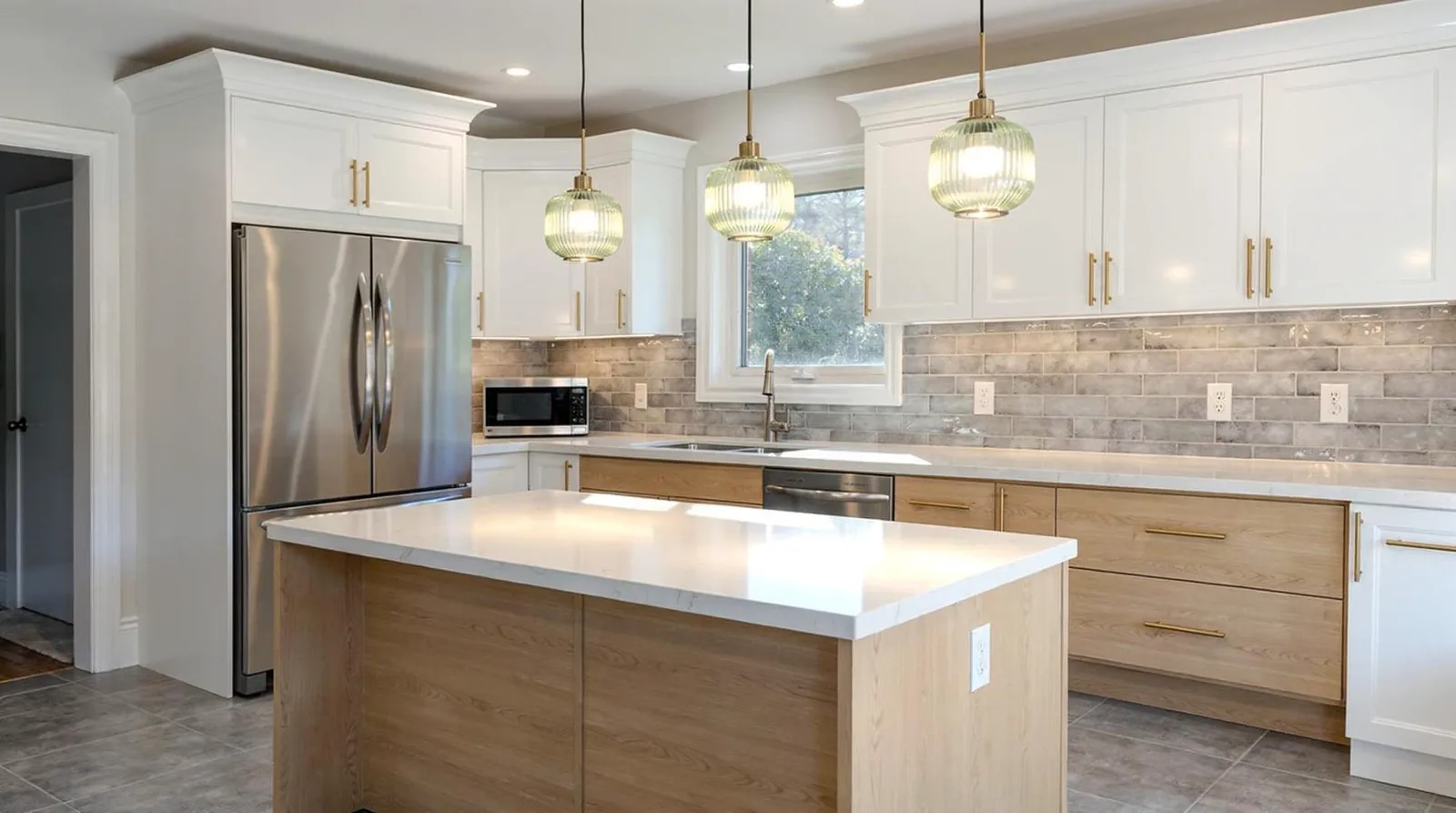
Kitchen Wholesale offers kitchen packages across several style tiers, from bright high-gloss finishes to classic shaker profiles and premium two-tone island layouts. Pricing varies by package, finish, and kitchen size, so homeowners should request a free estimate or design consultation to receive an accurate, project-specific quote. Delivery and installation options can be bundled into the final quote depending on the scope of the renovation.
Why does wholesale pricing beat retail?
Wholesale suppliers cut out layers of markup that retail showrooms typically add. Kitchen Wholesale sources Canadian-made cabinetry directly, passing savings to homeowners while still backing every purchase with reliable aftercare.
Does a lower price mean a longer wait?
Not necessarily. Trimming markups through wholesale channels also shortens production timelines, which helps homeowners sidestep the budget surprises and extended lead times common with traditional retail routes.
FAQ
What is the main difference between solid wood and engineered cabinet materials?
Solid wood cabinets offer natural grain and long-term durability, while engineered options like melamine boxes and thermofoil MDF doors provide consistent finishes and moisture resistance at lower cost.
Why do most cabinets combine solid wood with engineered materials?
Quality cabinets use solid wood for doors and face frames while relying on engineered materials for boxes. Panels, controlling cost and improving stability without sacrificing structural integrity.
How does Kitchen Wholesale build its cabinet boxes and doors for durability?
Cabinet boxes use 5/8-inch melamine for structural stability. Doors use 3/4-inch thermofoil MDF, which resists chipping and moisture better than raw wood in humid kitchens.
Conclusion
In closing, the choice between solid wood cabinets and alternative materials ultimately depends on your priorities regarding durability, maintenance, budget, and aesthetic vision. Solid wood delivers timeless appeal and longevity but requires ongoing care, while engineered options like melamine and thermofoil provide cost-effective durability with minimal upkeep. Kitchen Wholesale’s curated cabinet packages demonstrate how quality materials—regardless of composition—combine with expert design to create kitchens that balance performance, style, and value for Ontario homeowners seeking lasting solutions.