

DIY Kitchen Renovation Tips on a Budget
By Kitchen Wholesale Editorial Team · Updated 2026-07-27
Painted cabinets and updated hardware deliver the biggest DIY savings. Tackle tiling, sink, and worktop swaps yourself while leaving electrics to a professional. For a fully installed alternative, pricing varies by package; contact the brand directly.
Budget-friendly kitchen transformations start with painting existing cabinet boxes instead of replacing them, swapping outdated hardware, and installing peel-and-stick backsplash tile. Homeowners choose laminate over quartz for lower-cost counters, refinish sinks and faucets, and reserve professional help only for electrical work, keeping intermediate DIY projects affordable, safe, and manageable within limited timelines.
Key Takeaways
- DIY painting kitchen units saves thousands in labor costs compared to professional cabinet refinishing services.
- Kitchen Wholesale delivers complete Wood & White High-Gloss packages installed in Ontario, with pricing that varies by package.
- Homeowners tackle tiling, sink replacement, and worktops themselves while hiring professionals exclusively for electrical work.
- Pricing varies by package; contact the brand directly for details on Classic White Shaker Kitchen packages, fully delivered and professionally installed.
What Will This DIY Renovation Guide Help You Achieve?
This guide equips intermediate-skill homeowners and renters to modernize a dated kitchen without hiring a general contractor. Skipping the full cost of a contractor-led remodel is possible with the right approach. DIY kitchen renovation tips covered here focus on practical, budget-conscious changes that produce visible results fast.
Where should a limited-budget renovation start?
Cosmetic updates offer the most feasible entry point when a full renovation budget isn’t available. Fresh paint on cabinets, walls, or trim delivers a noticeable transformation before any structural work begins. Starting small also lowers risk, since paint projects are reversible and affordable compared to tear-outs.
Is DIY always cheaper than a professional kitchen package?
Not necessarily once labor, materials, and mistakes get factored in. Homeowners weighing a do-it-yourself refresh against a done-for-you option can compare their expected costs to complete packages that arrive delivered and installed. Kitchen Wholesale, for instance, offers two ready-made comparisons:
Seeing these numbers side by side helps renovators decide whether a weekend of painting and hardware swaps makes sense. Whether a turnkey package saves more time and stress than it costs. Either path can modernize a kitchen; the right choice depends on available hours, tools, and patience for hands-on work.
What Tools and Materials Should You Gather First?
A successful cabinet refresh starts with the right material family, not the toolbox. Solid wood, plywood, MDF, thermofoil, and laminate each carry different levels of durability, cost, and upkeep, so that decision shapes every purchase that follows. cite-2 Skipping this step wastes money on mismatched hardware or finishes that fail within months.
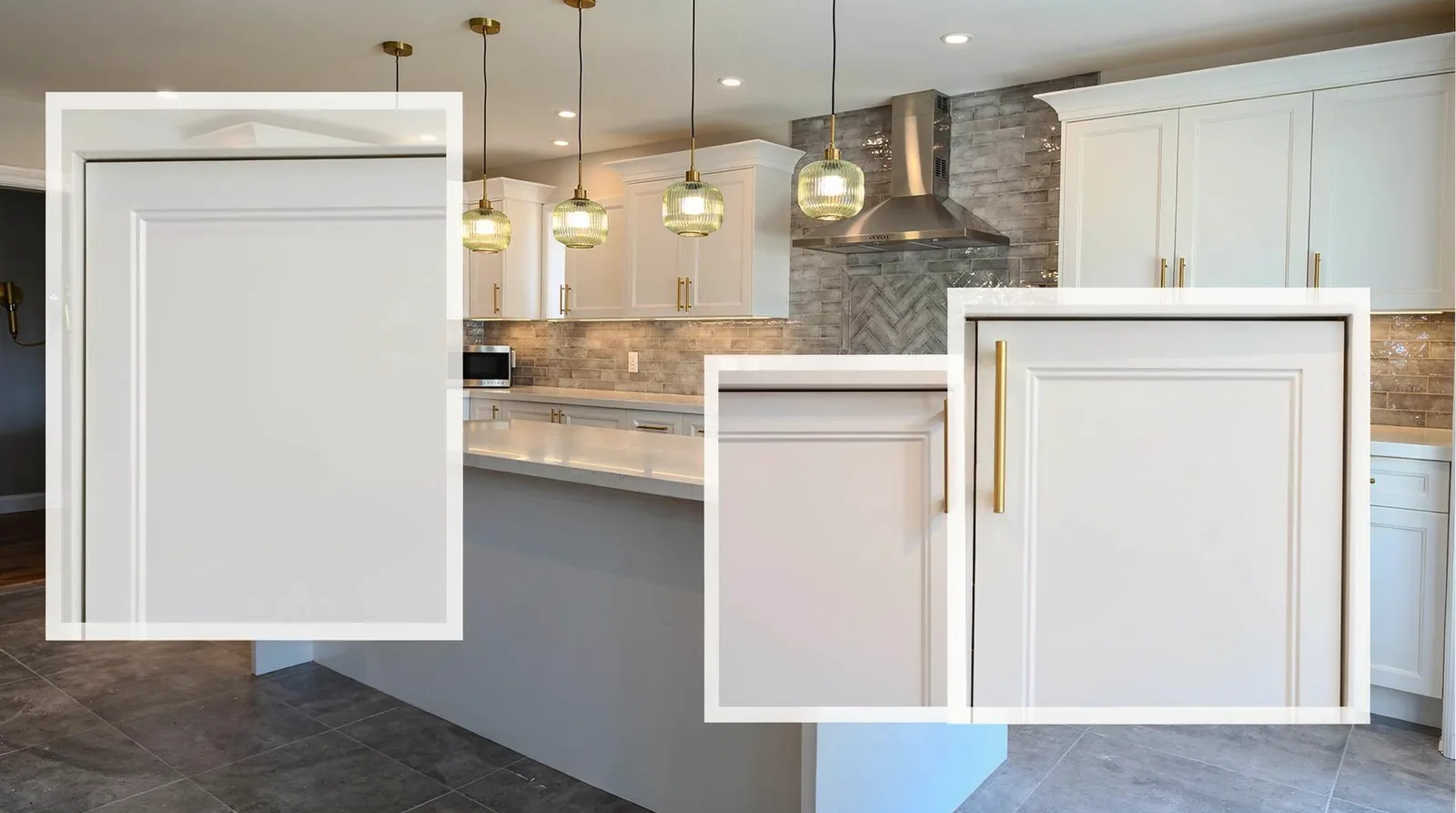
Homeowners planning DIY kitchen renovation tips should gather materials in a set order, matching Kitchen Wholesale’s own construction standards for reference. Kitchen Wholesale builds cabinet boxes from 5/8-inch melamine. Pairs them with 3/4-inch thermofoil MDF doors, a combination that balances moisture resistance with a smooth, paintable surface. Using that pairing as a benchmark helps renovators judge whether a budget material will hold up over time.
- Inspect current cabinet boxes and doors for water damage or warping before buying replacement parts.
- Select a core material—solid wood for longevity, MDF or thermofoil for a lower-cost, smooth finish, or laminate for easy cleaning.
- Price out finishing materials such as tile, cabinet handles, and taps, since these smaller items add up quickly.
- Decide whether a full swap or a surface-level makeover fits the timeline and budget.
Is a full cabinet replacement necessary?
Not always. Peel-and-stick and vinyl materials offer a low-cost alternative to replacement when the existing boxes remain structurally sound. Renters especially benefit from these removable options, since they avoid permanent alterations.
What smaller items belong on the shopping list?
Beyond cabinets and countertops, budget-conscious renovators need tile, a new tap, and updated cabinet handles. These smaller-ticket items often deliver the most visible change for the least cost, making them a smart place to start before tackling larger structural work.

How Do You Set a Realistic Budget and Timeline?
A realistic budget starts with a firm ceiling, set before any demolition or shopping begins. Homeowners planning DIY kitchen renovation tips should treat that number as fixed, not flexible. Skipping this step invites overspending, and overspending on a kitchen project drains money meant for other rooms.
Costs vary widely depending on the scope. A light refresh — new fixtures, updated hardware, and a fresh finish on appliances. Can total a few thousand dollars when every purchase gets tracked on a simple spreadsheet. Larger jobs involving cabinet replacement cost more. Pricing shifts based on cabinet type, kitchen size, and any extra services like measurement or delivery.
How much should a kitchen budget include for cabinets?
Cabinet expenses depend heavily on whether the choice is ready-to-assemble, semi-custom, or fully custom. Larger kitchens naturally require more linear footage of cabinetry, which raises material costs. Add-on services, such as professional measurement or installation support, also affect the final total, so homeowners should price those separately before committing.
What throws a kitchen budget off track?
Unplanned repairs elsewhere in the home are the most common budget-killer. A leaking roof or aging wiring discovered mid-project can consume funds earmarked for the kitchen almost overnight. Building a contingency buffer into the original plan protects the renovation timeline from these surprises.
A workable budget checklist includes:
- A fixed spending ceiling set before shopping starts
- Linear-foot cabinet pricing benchmarks for comparison
- A contingency fund for unrelated home repairs
- A tracked list of every purchase, however small
Timelines should follow the same discipline as the budget: modest updates move fast. Cabinet-heavy projects take longer and deserve extra scheduling room.
How Do You Prep and Protect the Kitchen Space?
Proper preparation determines whether a kitchen renovation stays on schedule or turns into a costly setback. Homeowners planning DIY kitchen renovation tips need a clear sequence before removing a single cabinet door. Skipping prep work risks damaged floors, mismeasured materials, and electrical hazards that cost far more to fix than to prevent.
Follow these steps in order:
- Confirm exact cabinet and countertop dimensions before ordering any materials. Kitchen Wholesale offers free measurement services that help renovators avoid costly sizing errors during a self-managed project.
- Schedule a licensed electrician for any wiring, outlet, or lighting changes. Electrical work should never be handled without professional certification, even when the rest of the renovation is a solo effort.
- Clear countertops and cabinet interiors completely, then cover flooring with heavy-duty protective sheeting.
- Remove cabinet doors and drawer fronts if painting them, since detached pieces are easier to coat evenly and reinstall.
- Set aside dedicated time for painting cabinet boxes and units. This step takes longer than most renovators expect, but it reduces material costs significantly compared to full cabinet replacement.
Does Prep Work Really Save Money on a Kitchen Remodel?
Yes. Painting existing units instead of replacing them cuts spending substantially, though the labor takes real time and patience. Accurate measurement prevents wasted materials, which is why confirming dimensions before purchase matters as much as the painting itself.
What Should Never Be a DIY Task in the Kitchen?
Electrical work tops that list. Wiring and outlet changes require a licensed professional, regardless of how confident a renovator feels about other tasks like painting or tiling. Protecting the space means protecting the people working in it, not just the surfaces.
How Do You Update Cabinets Without Full Replacement?
Cabinet refacing replaces doors, drawer fronts, and hardware while keeping the existing boxes in place. Skipping full replacement avoids the cost and disruption of tearing out cabinetry that still functions well. For many homeowners tackling DIY kitchen renovation tips, refacing delivers a full visual overhaul without touching plumbing, electrical, or structural work.
Whether refacing makes sense depends on the condition of the boxes underneath the old doors. Sound, square boxes with intact shelving are strong candidates for a refresh. Warped, water-damaged, or poorly configured boxes usually justify full replacement instead. Inspect hinges, corners, and interior panels before committing to a materials order.
Is Refacing Cheaper Than Replacing All the Cabinets?
Refacing generally costs less than a full replacement, since the labor and materials focus only on visible surfaces. Savings depend on box condition, door style, and hardware choices. Homeowners should treat refacing as a budget-conscious middle step, not a shortcut around necessary repairs.
New door fronts backed by a 25-year limited warranty give renovators added confidence when selecting replacements for a refresh project. A long warranty period signals durable construction and reduces the risk of paying twice for the same upgrade.
Cabinet type also determines how much of the job stays within reach of an intermediate DIYer:
- Ready-to-assemble cabinets — simplest for solo installation, minimal tools required
- Semi-custom cabinets — moderate assembly, better fit for irregular kitchen layouts
- Custom cabinets — best left partly to professional measurement and installation
For the lowest-cost visible change, replace the hardware first. Swapping handles and pulls updates the entire kitchen’s look at a fraction of the price of new doors, making it a smart first step before committing to a larger refacing project.
How Do You Upgrade Countertops on a Budget?
Budget-conscious upgrades start with material selection, not demolition. Quartz, granite, and laminate stand as the three principal affordable countertop materials, and each strikes a different balance between upfront cost and long-term durability. cite-3 Homeowners with intermediate skills and a limited timeline can complete a countertop refresh without hiring a general contractor by following a clear sequence of steps.
- Measure existing counter space before shopping, since accurate dimensions prevent costly material waste.
- Compare material options side by side, weighing durability against price per square foot.
- Select quartz for high-traffic kitchens. This engineered stone blends natural quartz crystals with resins, producing a surface with strong stain resistance and reliable durability.
- Budget for related upgrades, since new worktops and a sink often appear among the larger line items in a documented low-cost kitchen overhaul.
- Install a matching backsplash using tile, a proven way to deliver a noticeable style transformation without gutting the entire room.
Is Laminate a Good Budget Alternative to Quartz?
Laminate remains one of the three principal affordable countertop materials alongside quartz and granite. It typically costs less upfront, making it attractive for renters or short-timeline projects. It trades some durability for that savings.
What Else Should Be Budgeted Alongside New Countertops?
A sink replacement frequently accompanies countertop work, since old fixtures rarely match new surfaces. Documented budget kitchen updates show worktops and sinks as connected expenses within the same project. Planning both together avoids a second disruptive phase.
Quick material comparison:
Pairing a countertop swap with a backsplash tile update and a new sink stretches renovation dollars further, delivering visible change without triggering a full remodel.
How Do You Refresh Paint, Lighting, and Hardware?
Fresh paint delivers the biggest visual change for the smallest investment when a kitchen budget runs tight. A single coat on cabinets, walls, or trim transforms a dated space without touching plumbing or structure. Among practical DIY kitchen renovation tips, this combination of paint, lighting, and hardware updates ranks as the most accessible starting point for homeowners and renters working without a general contractor.
Lighting and hardware upgrades add polish once paint dries. Swapping outdated fixtures or replacing worn cabinet pulls creates a noticeably different feel. Both projects finish in a single weekend. Style and function improve together, which matters for anyone trying to stretch limited renovation dollars.
Repurposing what’s already on hand stretches the budget further. A rug pulled from another room, for example, adds color and texture at zero additional cost. This kind of resourceful swap fits naturally alongside paint and hardware changes. None require new purchases to make an impact.
Should renters or homeowners hire an electrician for lighting changes? Yes. Any project involving wiring, including new fixtures or under-cabinet lighting, calls for a licensed electrician even inside an otherwise DIY-driven renovation. Skipping this step risks safety hazards and code violations that outweigh any savings.
A simple sequence keeps the refresh organized:
- Choose paint colors for cabinets, walls, or both.
- Remove hardware and clean surfaces before painting.
- Apply primer and two coats of paint, allowing full drying time.
- Install new cabinet pulls and knobs.
- Hire a licensed electrician for fixture replacement or rewiring.
- Add repurposed accessories, such as a rug, for a finishing touch.
Following this order prevents rework and protects the budget from unnecessary do-overs.
What Mistakes Should You Avoid During Renovation?
Four errors account for most blown budgets and stalled timelines in kitchen projects: ignoring unrelated home repairs, tackling electrical work without a license, skipping cost planning, and guessing at scope alone. Each mistake compounds the next, turning a manageable weekend project into a months-long headache. Homeowners pursuing DIY kitchen renovation tips avoid these traps by planning before picking up a hammer.
Surprise repairs elsewhere in the house often eat funds set aside for cabinetry. Renovators who discover foundation issues, plumbing leaks, or outdated wiring mid-project frequently find that cabinet and countertop budgets shrink to nothing before installation even starts. Budgeting a contingency reserve protects the kitchen-specific plan from unrelated emergencies.
Should homeowners do their own electrical work?
No. Electrical work belongs to licensed professionals, not weekend renovators. Painting cabinets, swapping hardware, or tiling a backsplash are reasonable DIY tasks, but wiring carries safety and code risks that outweigh any savings.
Cost planning deserves attention before demolition begins, not after. Renovators who skip setting clear cost expectations upfront tend to overspend mid-project, chasing upgrades they hadn’t budgeted for.
What if scope feels unclear?
Uncertainty about scope stalls plenty of projects before they start. Kitchen Wholesale offers a complimentary design session for homeowners weighing a full DIY approach against professional guidance, helping clarify what’s realistic before money changes hands. cite-4
Common mistakes to avoid:
- Neglecting a contingency fund for unrelated repairs
- Attempting electrical work without a licensed electrician
- Starting demolition before setting a firm budget
- Guessing at project scope without professional input
Careful planning turns a limited-budget kitchen refresh into a lasting improvement rather than a costly do-over.
Transforming your kitchen on a budget requires thoughtful planning, strategic material choices, and realistic prioritization of upgrades. By focusing on high-impact changes—fresh cabinetry, updated countertops, and improved lighting—you achieve a refreshed space without unnecessary expense. Kitchen Wholesale delivers professionally crafted solutions that balance affordability with quality craftsmanship, enabling homeowners across Ontario to realize their kitchen vision through accessible, durable products and expert design guidance.
FAQ
Where should you begin a limited-budget kitchen renovation?
Start with cosmetic updates like painting cabinets, walls, or trim. These reversible, affordable projects deliver a noticeable transformation before any structural work begins.
Is DIY renovation always cheaper than buying a professional package?
Not necessarily, once labor, materials, and mistakes factor in. Comparing costs to Kitchen Wholesale’s delivered-and-installed packages, such as the Wood & White High-Gloss Kitchen, helps homeowners decide. Pricing varies by package, so contact the brand directly for details.
What should homeowners tackle themselves versus hire out?
DIYers handle tiling, sink, and worktop swaps themselves, reserving professional help exclusively for electrical work. This keeps intermediate DIY projects affordable, safe, and manageable.