
What Countertop Options Suit Your Kitchen Style? A Guide to Granite, Quartz, Laminate, and Marble Choices
By Andrei Scvortov, Kitchen Wholesale
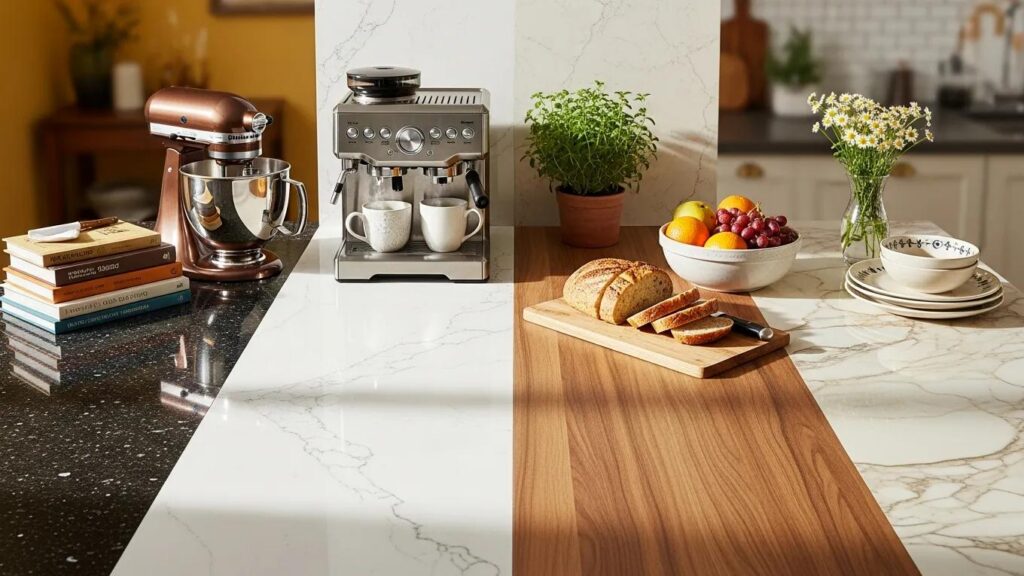
Choosing the right countertop influences both the look and the function of your kitchen. This guide compares granite, quartz, laminate, and marble—summarising key benefits and limitations to help you pick a surface that suits your style and use.
Granite Countertops:
Granite offers natural variation, strong heat resistance, and good scratch resistance, making it a durable option for busy kitchens. It requires periodic sealing to reduce staining but provides a long-lasting, character-rich surface for many design schemes.
Quartz Countertops:
Engineered from quartz crystals and resin, quartz is non-porous and low-maintenance. It comes in a wide range of consistent colors and patterns, can mimic natural stone, and often delivers lower lifetime maintenance despite a higher upfront cost.
Laminate Countertops:
Laminate is an economical, lightweight option available in many realistic finishes. It is easy to install and maintain for DIY projects, though it is less heat- and scratch-resistant than stone and may wear faster in heavy-use kitchens.
Marble Countertops:
Marble lends a classic, luxurious look with unique veining. As a softer stone it is more prone to scratching and staining and needs more attentive care and regular sealing to preserve its appearance.
Kitchen Style Compatibility:
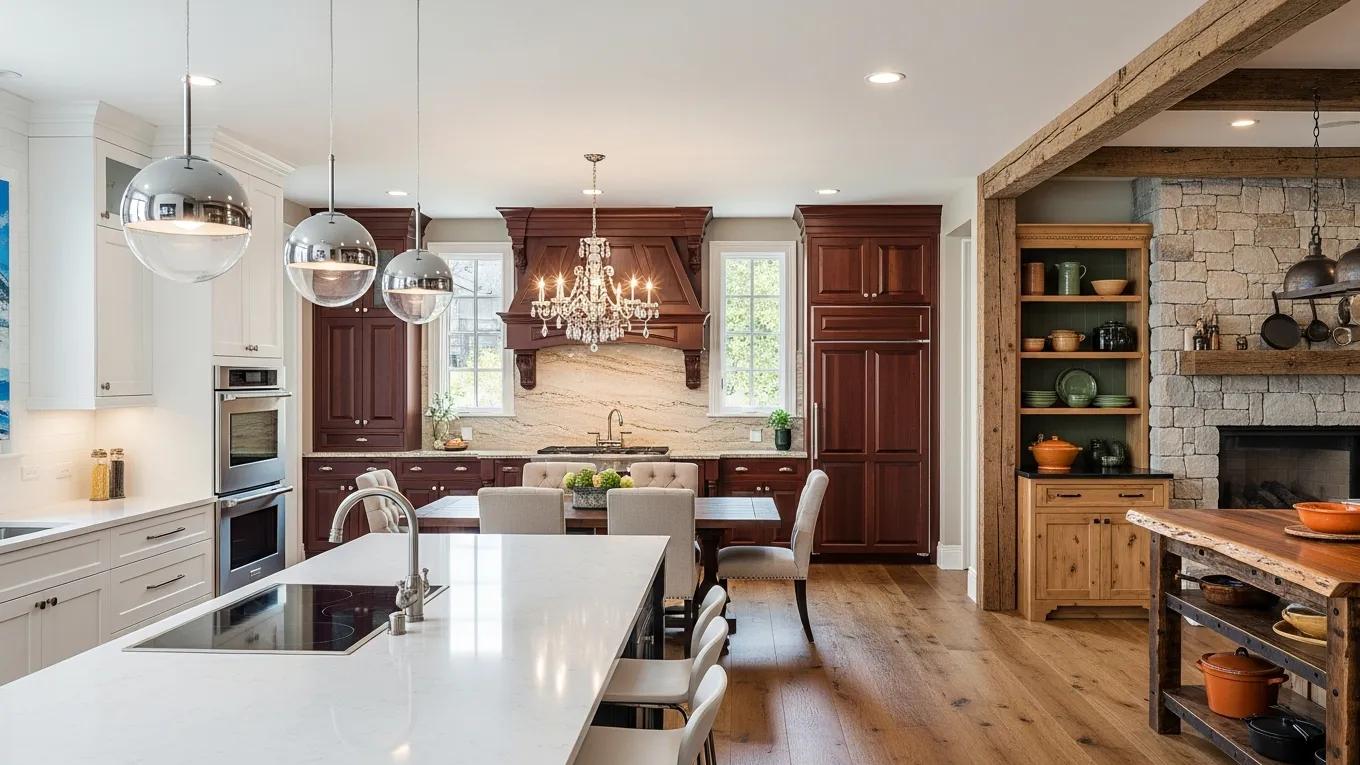
Different materials pair naturally with certain kitchen styles; consider durability and maintenance alongside aesthetics when selecting a surface.
- Modern Kitchens: Quartz is popular for its sleek, consistent finish and low upkeep.
- Traditional Kitchens: Granite or marble suit classic looks, offering natural character and solidity.
- Rustic Kitchens: Laminate can mimic wood or stone affordably, making it a practical rustic choice.
Which Countertop Materials Best Match Modern, Traditional, and Rustic Kitchen Styles?
Match material appearance and performance to the room: quartz for contemporary, granite or marble for classic warmth, and laminate for budget-friendly rustic or eclectic looks while keeping expected use in mind.
What Are the Pros and Cons of Popular Countertop Materials?
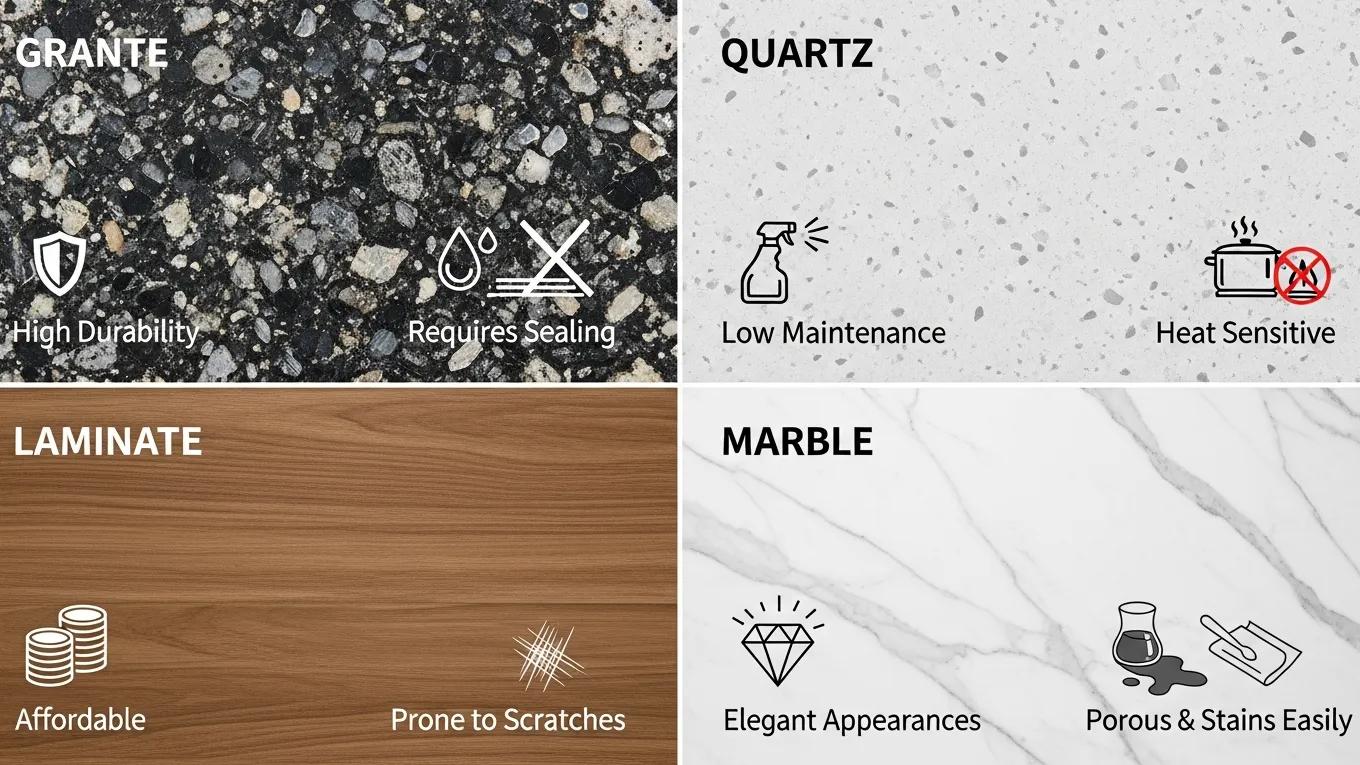
Weigh the trade-offs below to find the balance between cost, care, and style that fits your project.
The table highlights strengths and maintenance considerations to guide your choice.
How Do Granite and Quartz Complement Different Kitchen Designs?
Granite’s natural veining complements traditional and rustic interiors and holds up well in high-traffic kitchens. Quartz’s uniform surfaces suit modern designs and offer low-maintenance performance. For local product options, see kitchen wholesale.
What Kitchen Styles Are Ideal for Laminate and Marble Countertops?
Laminate can work in both modern and rustic schemes when cost is a priority, offering convincing imitations of more expensive materials. Marble best serves traditional or upscale kitchens where aesthetic priority outweighs higher maintenance.
What Are the Durability and Maintenance Features of Granite and Marble?
Granite resists heat and wear but benefits from sealing to prevent stains. Marble requires more careful cleaning and more frequent sealing because it is softer and more susceptible to etching and scratches.
How Do Quartz and Laminate Countertops Compare in Cost and Care?
Quartz carries higher initial costs but typically lower upkeep and longer service life. Laminate is the least expensive upfront but may require replacement sooner in heavy-use situations. Balance budget and expected lifespan when deciding.
How Can You Choose the Best Budget Kitchen Countertops Without Sacrificing Style?
Use high-quality laminate or consider remnant pieces of granite or quartz for a more premium look at reduced cost. Focus on functionality and select finishes that complement cabinets and lighting for the greatest visual impact per dollar.
Which Affordable Materials Offer Style and Functionality?
Laminate and solid surface alternatives provide attractive, practical surfaces at lower cost. Solid surfaces give seamless joins and easy repairs; laminate offers wide pattern choices for budget renovations.
What Should You Consider When Selecting Laminate Countertops for Budget Kitchens?
Choose higher-grade laminate with realistic textures and adequate thickness for durability. Check edge profiles and underlayment to improve longevity, and compare warranty and installation options.
What Are the Latest Trends and Expert Recommendations for Kitchen Countertops in 2026?
Quartz remains in demand for its durability and design range. Interest in eco-friendly materials is growing, so consider recycled or sustainably sourced surfaces if sustainability is a priority.
Why Is Quartz Gaining Popularity Among Homeowners?
Quartz combines durability, ease of care, and a wide palette of consistent finishes, making it an attractive, hygienic surface for active kitchens.
How Do Eco-Friendly Countertop Materials Fit Various Kitchen Styles?
Recycled and sustainably sourced countertops can suit modern, traditional, and rustic interiors while reducing environmental impact. They offer diverse looks and growing availability from manufacturers focused on sustainability.
If you wish to discuss your specific requirements or review options further, please get in touch with our experts. We can assist you in selecting the best countertop solution for your kitchen.
Frequently Asked Questions
What factors should I consider when choosing a countertop material for my kitchen?
Consider durability, maintenance, cost, and how the surface complements cabinetry and lighting. Match the material to how you use the kitchen—for example, choose heat- and stain-resistant surfaces if you cook frequently.
Are there eco-friendly options for kitchen countertops?
Yes. Recycled-glass, bamboo, and reclaimed wood are among eco-friendly choices. Check manufacturer certifications to verify sustainability claims.
How can I maintain the appearance of my marble countertops?
Seal marble regularly (commonly every 6–12 months), clean with pH-neutral products, wipe spills promptly—especially acids—and avoid abrasive cleaners to reduce etching and staining.
What are the best countertop materials for small kitchens?
Light-colored quartz or granite and seamless solid surface tops help make small kitchens feel larger. Laminate also provides affordable, space-enhancing patterns.
How do I choose a countertop that matches my kitchen’s color scheme?
Start with dominant cabinet and floor colors. Neutral countertop tones offer flexibility; for bolder schemes, choose materials with veining or undertones that echo your palette. View samples under your kitchen lighting before deciding.
What are the advantages of using solid surface countertops?
Solid surfaces are non-porous, repairable, and provide seamless installations. They resist bacteria and stains and are easy to maintain in modern kitchens.
Can I install countertops myself, or should I hire a professional?
Laminate can often be a DIY project; granite, quartz, and heavy stone typically require professional templating and installation due to weight and cutting precision. Professional installation reduces risk and ensures a proper fit.