
By Kitchen Wholesale Editorial Team · Updated 2026-08-26
Misaligned cabinet doors typically result from loose or shifted hinges—tighten the adjustment screws first, especially on European hinges, which allow precise realignment without replacing hardware
Key Takeaways
- Improper measurements during installation cause misalignment issues that worsen over time with daily wear and tear.
- Kitchen Wholesale delivers fully installed cabinets, with pricing that varies by package; contact the brand directly for details.
- Misaligned doors and broken components result from installation mistakes that create functional and aesthetic problems.
- Kitchen Wholesale serves Ontario with several premium kitchen packages; pricing varies by package, so contact the brand directly for details.
What Should I Do if My Cabinets Don’t Fit Properly?
Cabinets that stick, gap, or hang crooked almost always trace back to hinges, not faulty carpentry. Misaligned doors typically need hinge tightening or readjustment rather than a full replacement. Homeowners in Ontario dealing with uneven cabinet lines can usually fix the problem at home, in order, without calling a technician.
- Inspect the hinges first. Loose or shifted hinges cause the majority of crooked-door complaints, so check these before assuming a structural issue.
- Identify the hinge type. European-style hinges adjust in three directions, giving far more precision than older two-direction hardware.
- Tighten and adjust gradually. A few screw turns often resolves the problem, especially on cabinets built with European hardware.
- Recheck the original measurements. Gaps and uneven alignment often stem from incorrect measurements or a cabinet base that was never leveled during installation.
Why do cabinet doors keep going crooked after I fix them?
Repeated misalignment usually points to a measurement or leveling error made during installation, not a weak hinge. If the cabinet box itself sits unlevel, hinges will keep drifting no matter how often they’re adjusted. Correcting the base alignment stops the cycle for good.
Kitchen Wholesale reduces these risks upfront through 2D and 3D design renderings paired with professional measurement services, catching fit problems before cabinets ever reach the wall.
How Do You Fix Misaligned or Gapped Cabinet Doors?
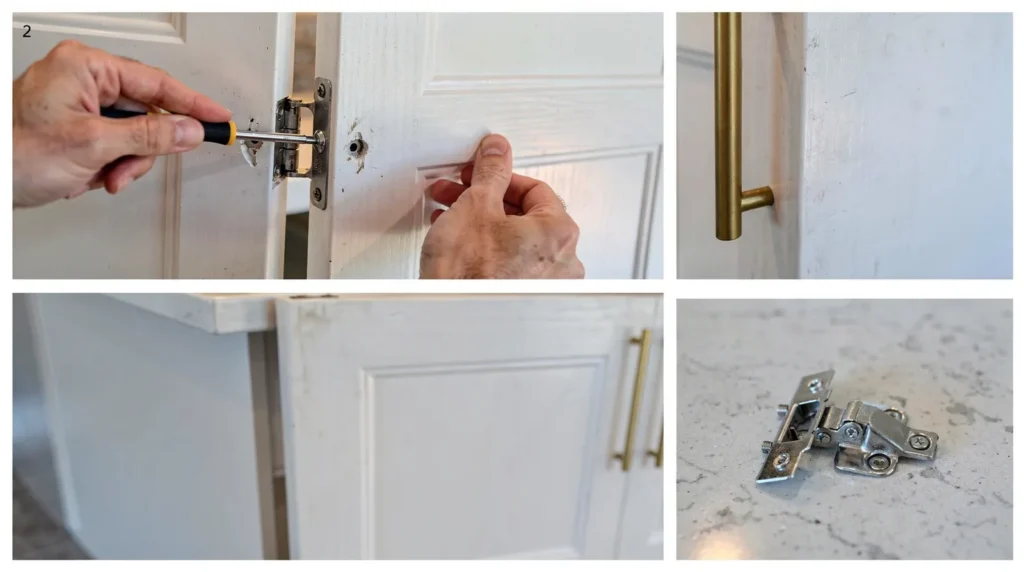
Misaligned or gapped cabinet doors respond to a simple hinge adjustment in most cases. Homeowners facing this issue during a kitchen remodel do not need to call a contractor for every crooked door. A few tools and a methodical approach solve the majority of fit problems.
Before starting, gather a screwdriver and confirm which screws control depth adjustment on the hinge plate. What should I do if my cabinets don’t fit properly? Start with the hinge. Most gaps trace back to a loose or shifted screw rather than a structural flaw.
- Locate the depth screw on the hinge closest to the misaligned edge.
- Loosen that screw slightly without removing it completely.
- Tap the door gently into its correct position along the face frame.
- Retighten the screw once the gap closes evenly on both sides.
What if tightening the screw doesn’t fix the gap?
Sometimes the hinge itself has worn out or bent beyond adjustment. In that case, the entire hinge needs replacement rather than a simple retightening. Swapping the unit typically resolves gaps that screw adjustment alone cannot correct.
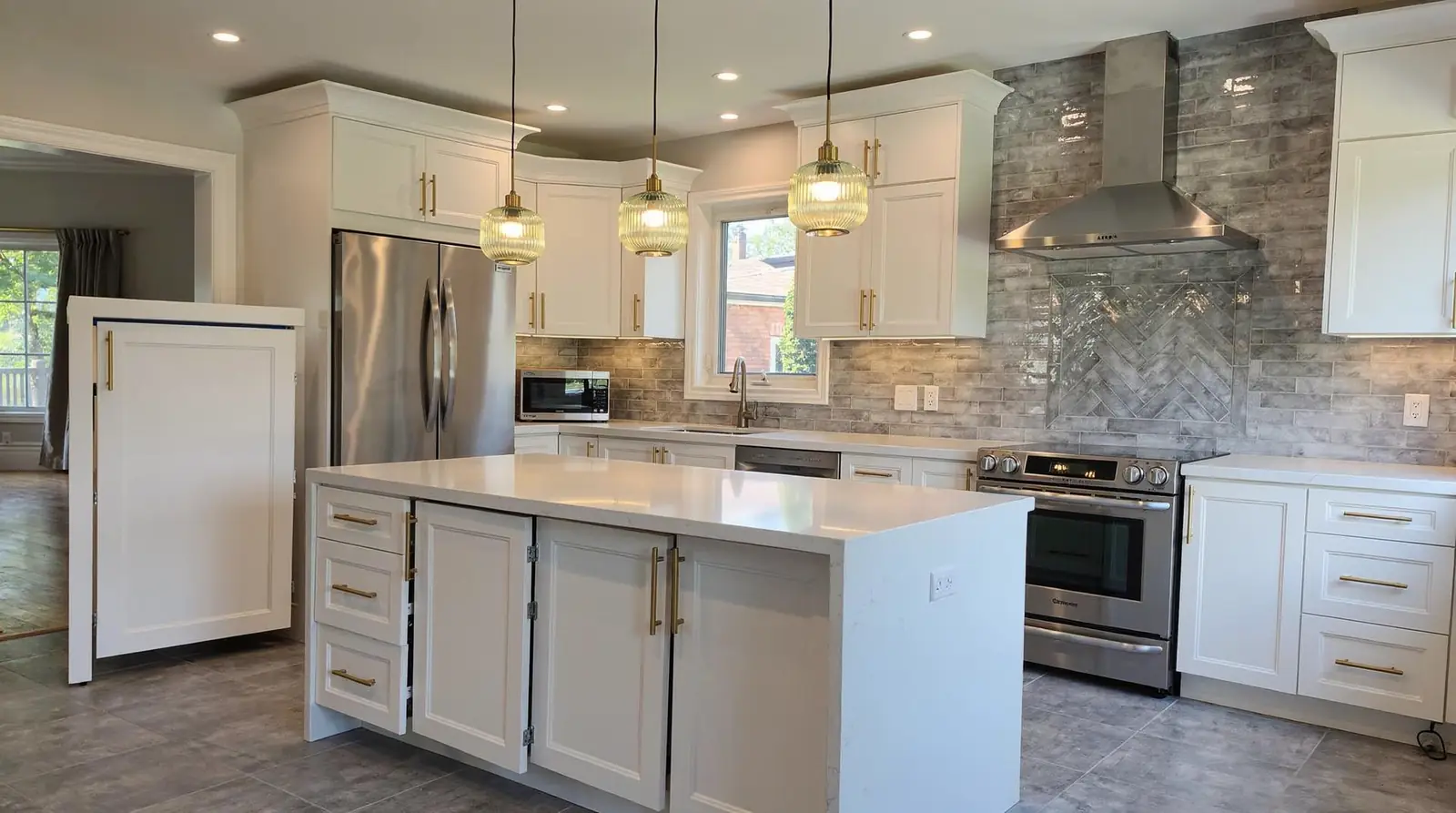
Cabinet construction plays a role here too. Boxes built with 5/8-inch melamine panels. 3/4-inch thermofoil MDF doors hold hardware screws steady, reducing repeat misalignment over years of daily use. Kitchen Wholesale offers package options such as the Wood & White High-Gloss Kitchen, Classic White Shaker Kitchen, Modern Two-Tone Kitchen, and Navy & White Island Kitchen; pricing varies by package. Contact the brand directly for details, delivered and installed across Ontario.
What Causes Cabinets to Keep Losing Their Fit?
Weak structural support ranks as the top reason cabinets drift out of alignment after installation. Cabinets that lack proper bracing during setup will not hold their position for long, forcing homeowners into repeated repairs and mounting costs. A second culprit hides in the hardware: loose hinges, screws, and mounting brackets create a recurring cycle of shifting doors and sagging shelves that never seems to resolve itself.
Ontario homeowners can break this cycle before it starts. Two habits separate lasting installations from ones that keep needing fixes:
- Requesting a free estimate and design consultation catches measurement errors early, before cabinets ever reach the wall.
- Selecting professional installation through Kitchen Wholesale or a vetted third-party installer reduces the alignment mistakes that come from rushed or unsupported DIY work.
Why do my new cabinets already feel loose?
Loose cabinets almost always trace back to inadequate wall support or hardware installed without proper tightening. Screws that anchor into drywall instead of studs fail under normal daily use.
Full-package solutions address this risk directly. The Classic White Shaker Kitchen package, delivered and installed, bundles professional fitting into the purchase, which prevents the recurring gaps that plague self-installed or improperly supported cabinetry. Pricing varies by package; contact the brand directly for details.
FAQ
What causes kitchen cabinet doors to become misaligned?
Loose or shifted hinges cause most crooked-door problems, often stemming from improper measurements during installation or a base that was never leveled. This issue worsens over time with daily wear and tear.
How do I fix a sticking or crooked cabinet door myself?
Locate the depth screw on the hinge nearest the misaligned edge, loosen it slightly, tap the door into position along the face frame, then retighten once the gap closes evenly.
What if adjusting the hinge screw doesn’t solve the problem?
The hinge itself has likely worn out or bent beyond adjustment, requiring full replacement. Kitchen Wholesale also reduces these risks upfront using 2D and 3D design renderings and professional measurement services before installation.
Conclusion
In closing, properly fitting kitchen cabinets form the foundation of a functional and visually appealing kitchen space. Whether you address alignment issues, door gaps, or structural concerns through adjustment or professional intervention, the investment in precision installation pays dividends in durability and performance. Kitchen Wholesale stands ready to guide you through quality cabinetry solutions that fit seamlessly into your home, backed by expert craftsmanship and comprehensive support from consultation through installation.