
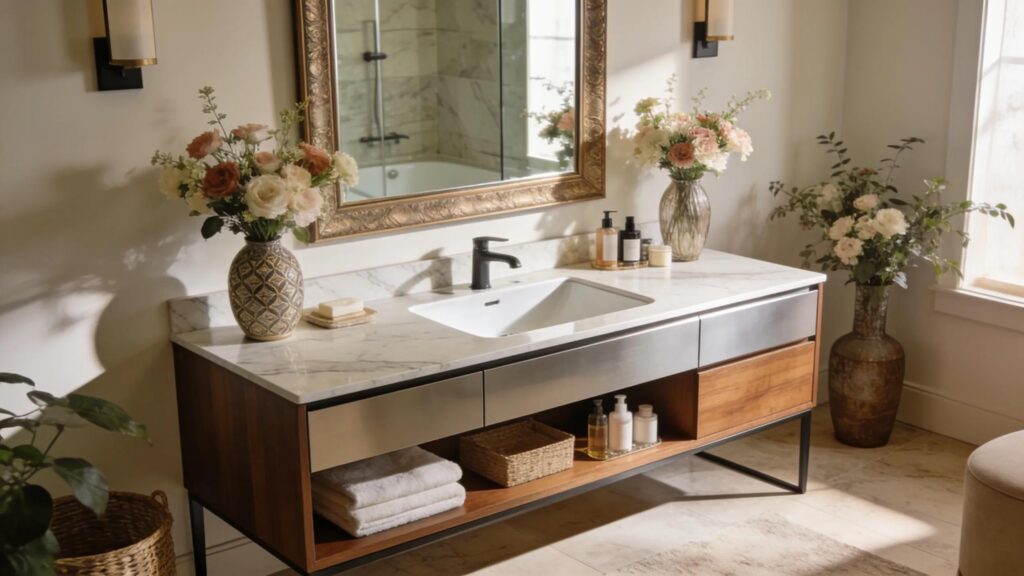
How to Choose the Best Bathroom Vanity for Your Home: A Guide to Styles, Sizes, and Materials
By Andrei Scvortov, Kitchen Wholesale
Choosing the appropriate bathroom vanity affects both function and appearance. A correctly selected vanity improves the bathroom’s design while supplying necessary storage and workspace. This guide outlines styles, sizes, and materials so you can make an informed choice that complements your home. Many homeowners find it difficult to balance style with practicality; understanding the available options simplifies the selection process. We cover common styles, measuring guidance, material considerations, budgeting, and other practical factors.
This approach aligns with current research on optimizing bathroom design for both aesthetics and functionality.
Optimizing Bathroom Design: Aesthetics, Space, and Home Value
The bathroom has become a feel-good space within the home. Its design and planning are increasingly influenced by technical considerations and product selection. Current research develops a multi-objective optimisation model that addresses objectives such as optimising available space, improving accessibility and convenience, enhancing aesthetic appeal, and increasing home resale value.Optimising Bathroom Space,
Design and Aesthetics, PC Jha, 2024
Style
Style should align with the overall home design. Common options—modern, traditional, and farmhouse—offer distinct characteristics. Modern vanities emphasise clean lines and minimal finishes; traditional units include ornamental details and classic hardware. Floating vanities mount to the wall, creating the perception of more floor space and making them suitable for smaller bathrooms. Also assess installation complexity, as some styles will require professional fitting.
Size
Choose a vanity size that balances function and proportion. Measure the room to ensure the unit fits without dominating the space. Consider storage requirements: larger vanities provide additional drawers and cabinets for toiletries and linens, which supports organisation and daily use.
What Size Bathroom Vanity Fits Small Bathrooms Best?
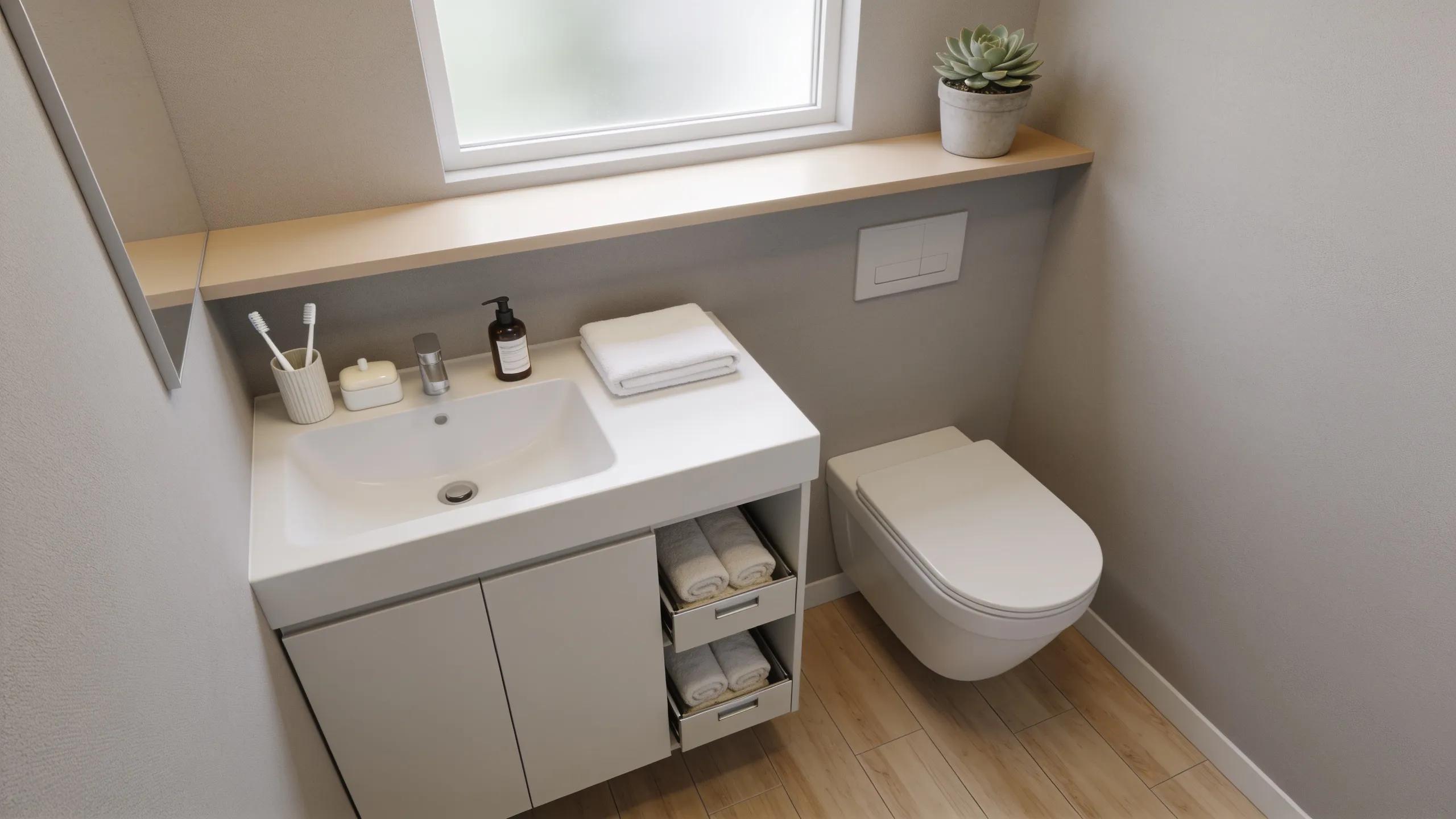
Compact single-sink vanities are typically the most effective choice for small bathrooms. They preserve floor area while delivering essential storage. Look for widths between 24 and 30 inches to fit constrained spaces without compromising style.
How to Measure Your Bathroom for Vanity Installation?
Measure with a tape and note the available width and depth where the vanity will sit, allowing for plumbing and fixtures. Record the intended vanity height; standard heights range from 30 to 36 inches. Accurate measurements reduce installation issues and ensure a proper fit.
Materials
Material selection strongly influences durability and appearance. Common materials include solid wood, MDF (medium-density fiberboard), and plywood. Solid wood provides a classic look and durability; MDF is cost-effective and less prone to warping; plywood offers strength and stability at a moderate price point.
The table compares durability, water resistance, and maintenance requirements for common vanity materials to support an informed selection.
Budget
Set a budget to avoid overspending and include costs for the vanity, installation, and any accessories. Affordable options are available from a range of retailers, including Kitchen Wholesale, which specialises in budget-friendly kitchen and bathroom fixtures. Careful budgeting helps you find a vanity that meets functional needs within your price range.
Additional Tips
Use design consultations to confirm the vanity integrates with your overall bathroom plan. Purchasing coordinated items can reduce costs, as many retailers offer discounts for bundled products.
What Are the Most Popular Bathroom Vanity Styles?
Popular bathroom vanity styles include the following options:
- Contemporary: Characterized by sleek lines and minimalistic designs, contemporary vanities often feature integrated sinks and modern finishes.
- Traditional: These vanities typically showcase intricate details, rich wood finishes, and classic hardware, providing a timeless look.
- Farmhouse: Known for their rustic charm, farmhouse vanities often incorporate distressed wood and vintage-inspired designs.
Each style appeals to different preferences and will shape the bathroom’s overall ambience.
How Do Modern Bathroom Vanities Enhance Home Design?
Modern vanities contribute to design cohesion through clean lines and functional storage that support a minimalist aesthetic. Integrated storage solutions help maintain uncluttered surfaces, making these units appropriate for contemporary homes. High-quality materials and finishes create a refined appearance that can elevate the space.
What Features Define Traditional and Floating Vanities?
Traditional vanities are recognised for decorative moldings and classic hardware, making them suitable for traditional or vintage-inspired interiors. Floating vanities are wall-mounted, offering a contemporary look and making small bathrooms feel more spacious. The choice depends on personal preference and the home’s overall design language.
Which Bathroom Vanity Materials Offer Durability and Style?
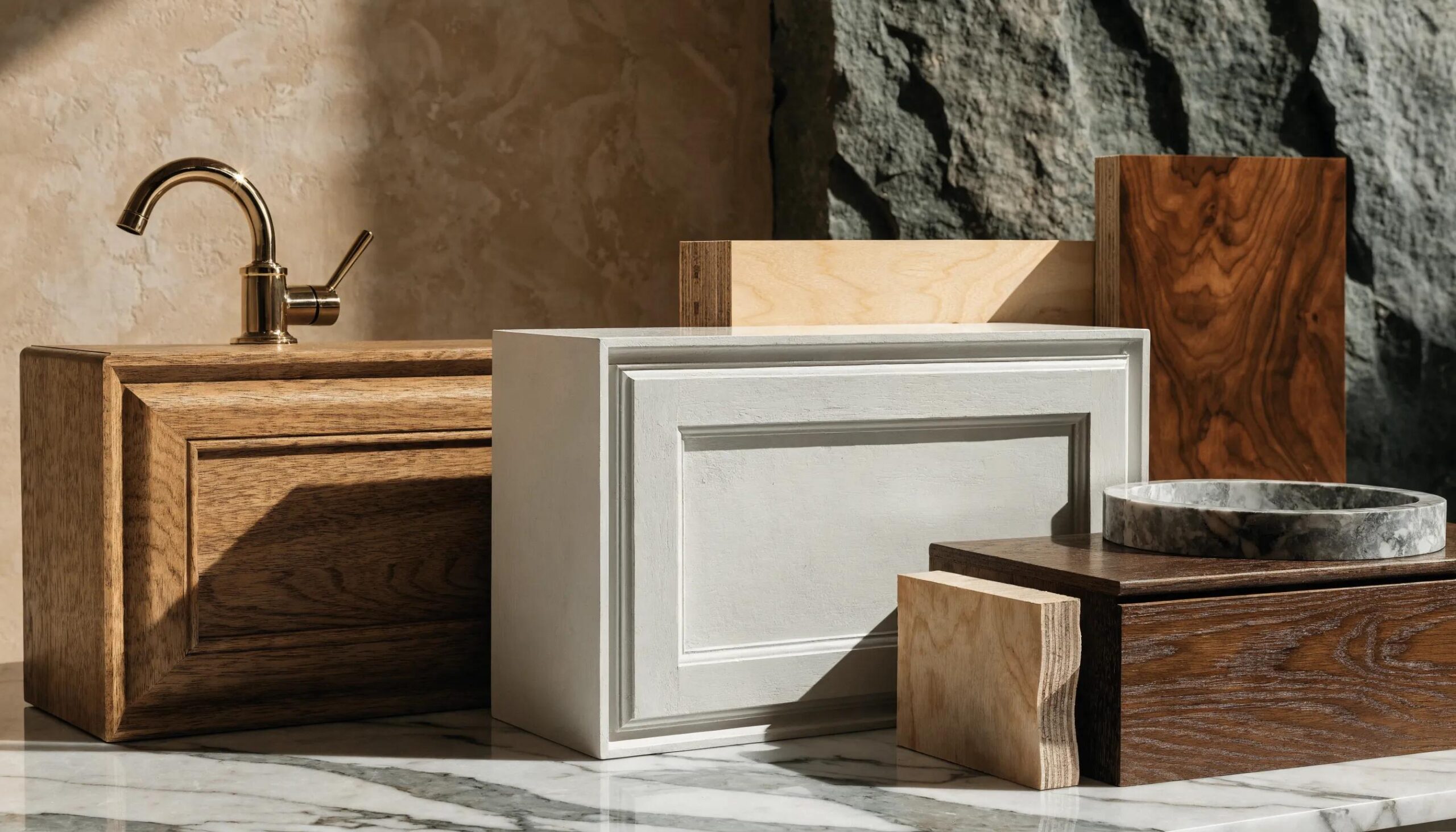
For durability and aesthetic appeal, solid wood, MDF, and plywood are the most common choices. Solid wood offers strength and a classic appearance; MDF provides a budget-friendly option with reasonable durability; plywood balances structural strength with improved moisture resistance.
What Are the Benefits of Quartz, Wood, and Laminate Vanities?
Each material offers distinct benefits:
- Quartz: Known for its durability and low maintenance, quartz countertops resist stains and scratches, making them ideal for busy bathrooms.
- Wood: Offers a timeless aesthetic and can be refinished, but requires regular maintenance to prevent water damage.
- Laminate: An affordable option that comes in various colors and patterns, laminate is easy to clean but may not be as durable as other materials.
How Do Material Choices Affect Maintenance and Longevity?
Material choice directly affects maintenance and lifespan. Solid wood requires periodic sealing to prevent water damage; MDF is less suitable for humid environments; plywood provides a durable compromise with lower maintenance. These considerations inform a long-term decision.
Where to Find Affordable Bathroom Vanities That Meet Your Needs?
Affordable bathroom vanities can be found through local retailers and online stores, which frequently run sales and promotions. Kitchen Wholesale offers competitive pricing and a selection aimed at value-conscious buyers, helping you secure good value for your investment.
How Does Kitchen Wholesale Provide Value in Bathroom Vanity Selection?
Kitchen Wholesale supplies a range of affordable vanities with competitive pricing and a focus on quality across several styles and budgets. Their design consultations assist with informed selections and ensure the vanity complements the bathroom. For specific product lines, see the London Collection.
What Should You Consider When Purchasing Online or Locally?
When purchasing a vanity, evaluate material quality, retailer reputation, and the return policy. Online shopping offers convenience; local stores allow in-person inspection. Compare prices and product features to determine the best option. For further assistance, contact us.
Frequently Asked Questions
What is the difference between floating and traditional bathroom vanities?
Floating vanities are wall-mounted, creating an illusion of space and simplifying cleaning beneath the unit. They typically present sleek, modern styling suited to contemporary bathrooms. Traditional vanities are freestanding and often include ornate details, making them appropriate for classic or vintage interiors. The decision hinges on design preference and available space.
How can I ensure my bathroom vanity is environmentally friendly?
Choose vanities made from sustainable materials such as bamboo or reclaimed wood and select manufacturers that employ eco-conscious production methods. Look for certifications like the Forest Stewardship Council (FSC) and prefer low-VOC finishes to reduce indoor emissions.
What are the most common mistakes to avoid when selecting a bathroom vanity?
Frequent mistakes include selecting an incorrect size, underestimating storage needs, and choosing materials unsuitable for humid conditions. Also ensure the chosen style harmonises with the rest of the bathroom. Accurate measurements and a clear assessment of functionality will minimise these errors.
How do I maintain my bathroom vanity over time?
Maintain your vanity with mild soap and water and avoid harsh chemicals. Wood units benefit from periodic sealing to prevent water damage; laminate surfaces should be wiped clean to preserve appearance. Reduce excess moisture by using ventilation or an exhaust fan.
Can I install a bathroom vanity myself, or should I hire a professional?
Installation depends on your skill level and the unit’s complexity. Simple freestanding vanities can often be installed with basic tools. Floating units or installations that require plumbing adjustments generally benefit from professional installation to ensure correct alignment and sealing.
What trends in bathroom vanities should I be aware of?
Current trends include multifunctional vanities with integrated sinks, minimalist designs with concealed storage, and the use of sustainable materials. Bold colours and distinctive finishes are also gaining popularity. Review design shows and industry publications for examples and to assess suitability for your layout.